
Water in the Wild: How to Make It Safe to Drink
By Almir • Thursday, July 2, 2026
Every time I fill my bottle from a stream, I catch myself wondering — is this actually safe? Most of the time, the honest answer is no. Giardia, Cryptosporidium, E. coli — these are invisible and these are the things that will ruin your trip (or worse).
The rule I follow: never drink untreated water from any natural source, no matter how clear and cold it looks.
This guide is intentionally focused on the essentials. There are many additional field methods for water filtration in the bush, including improvised filters, gravity systems, and seep/foxhole collection. Joining our hikes and events, along with doing your own research and hands-on practice, is strongly recommended. Good gear can absolutely make a life-or-death difference, but knowledge and skill are just as important.
Here's what you actually need to know.
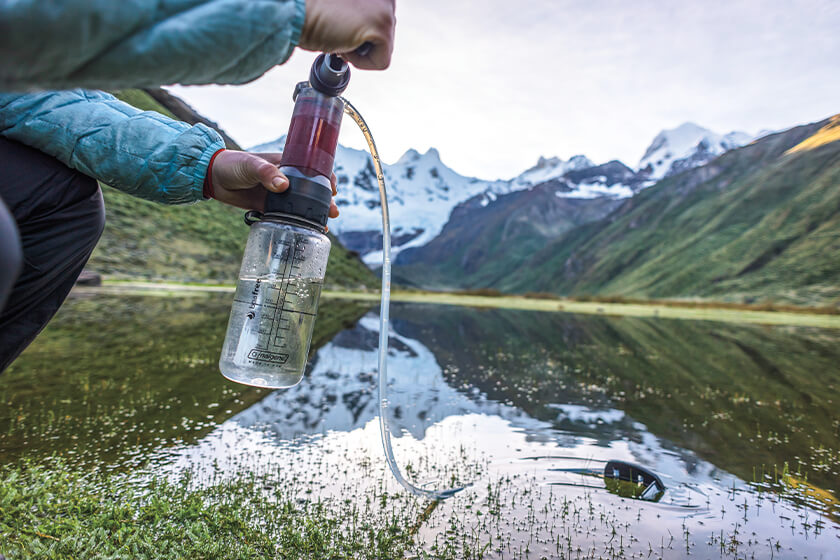
The Threats You Can't See
Natural water in Georgia and the Southeast regularly contains:
- Giardia — the most common backcountry pathogen, causes severe cramps and diarrhea starting 1–3 weeks after exposure
- Cryptosporidium — similar to Giardia, highly resistant to chemical treatment
- E. coli and other bacteria — from animal waste upstream, even in remote areas
- Chemical runoff — near trails, farmland, or roads
Rain water and morning dew on non-poisonous plants like moss? That's actually safe to drink as-is. Everything else needs to be treated.
4 Methods — Ranked by Reliability
1. Boiling — Most Reliable, No Gear Needed
A rolling boil for 1 full minute kills everything — bacteria, viruses, and protozoa. At elevations above 6,500 ft, go for 3 minutes since water boils at a lower temperature.
Good for: Emergencies, when your filter breaks, or when you have a fire going anyway
Limitation: Doesn't remove chemical contamination or sediment. Water needs time to cool.
2. Portable Filter — Best for Day-to-Day Hiking
A good filter removes bacteria and protozoa down to 0.1 microns. For North Georgia trails, this is all you need*.
My pick: Grayl GeoPress — it's fast, effective, and doubles as a container. No need to boil water or take too much time to process
Also solid: The Sawyer Squeeze works as a squeeze filter adapter for any water bottle
Note: Standard filters don't remove viruses. In North America that's not a concern in the backcountry, but if you want to play it extra safe, pair with Aquatabs.
3. Chemical Tablets — The Lightweight Backup
Throw a pack of Aquatabs in your kit and forget about them until you need them. They're basically weightless and last years.
Best for: Emergency backup or when your filter freezes in cold weather.
4. Improvised Field Filter — No Gear? Build One
If you're in a genuine survival situation with no gear, you can build a basic filter from what's around you. This won't make water safe to drink on its own — it removes debris and improves clarity so boiling can do the rest — but it's far better than nothing.
What you need:
- Two containers (bottles, bamboo sections, hollow logs — anything that holds water)
- Pebbles, coarse sand, fine sand, and charcoal (from a burned-out fire)
- A cloth, shirt, coffee filter, or any porous fabric
How to build it:
- Start with the coarse layer — pebbles over cloth at the bottom of your top container
- Add a layer of sand above the pebbles
- Crush cold charcoal into powder and layer it on top — this removes sediment, some contaminants, and improves taste (it's the same activated carbon used in store-bought filters)
- Pour water through slowly, collecting in your second container
- Run it through a second time if needed
- Always boil after — the improvised filter removes particles but not pathogens
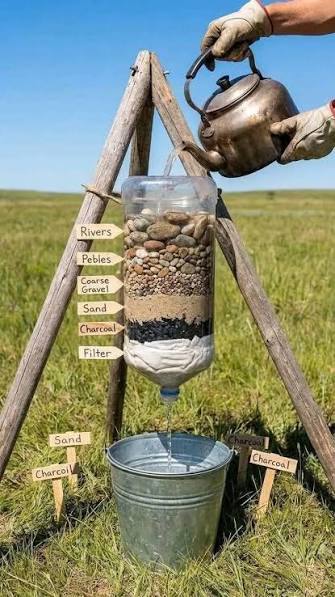
Bamboo sections work especially well since they're hollow and water flows through naturally. Layer the materials inside and let gravity do the work.
The Water Purification Setup I Actually Carry - ~16.7oz for entire kit
For day hikes in Georgia:
- Grayl GeoPress — it's fast, effective, and doubles as a container. No need to boil water or take too much time to process
- Aquatabs in your kit and forget about them until you need them. They're basically weightless and last years.
- Coffee Filters because they're extremly lightweight, and a shemagh or a neck gaiter (Part of my usual outfit). These can be used to create your custom filters for getting rid of bigger particles and can serve multi use cases such as protection from the elements, way to wipe down sweat, etc
- Toaks Titanium 750ML Pot This is an absolute must! The Grayl fits right in side, and this works as an additional way to purify water by boiling it and also allows you to cook food and make bush tea! YUM
The most important thing is to have something with you. A $15 Sawyer Squeeze is lighter than a protein bar
If you drank questionable water, don't wait for symptoms — see a doctor. Giardia takes 1–3 weeks to show up.
Enjoyed this? Come hike with us.
Our community learns skills on the trail together. Request to join our WhatsApp group.
Request to Join →